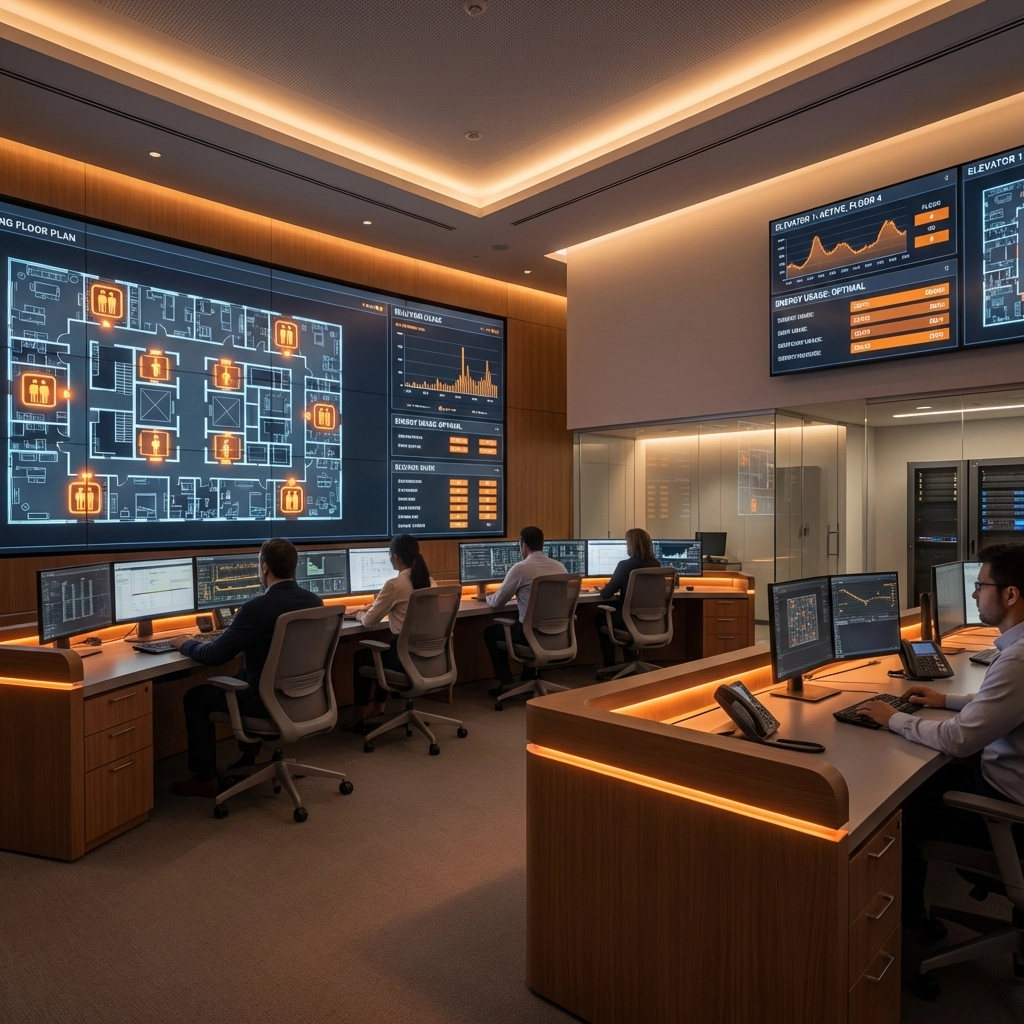
Tag: Predictive Maintenance

  • Beyond the Sensor: What Elevator Data Is Actually Telling You

    Most buildings track elevator data. Few use it to understand what’s actually changing.

    Most buildings today are collecting more elevator data than ever before.

    But very little of it is being used to its full potential.

    Because most systems are designed to answer a simple question:

    “Is something wrong?”

    The more useful question is:

    “What is this system trying to tell us before anything breaks?”

    Not All Data Is Created Equal

    When people think about elevator monitoring, they usually think in terms of failures:

    • A fault code triggers
    • A component stops working
    • An alert gets sent

    That’s the obvious layer.

    But underneath that is a much quieter—and far more valuable—set of signals:

    • Slight increases in door dwell time
    • Small delays in floor-to-floor travel
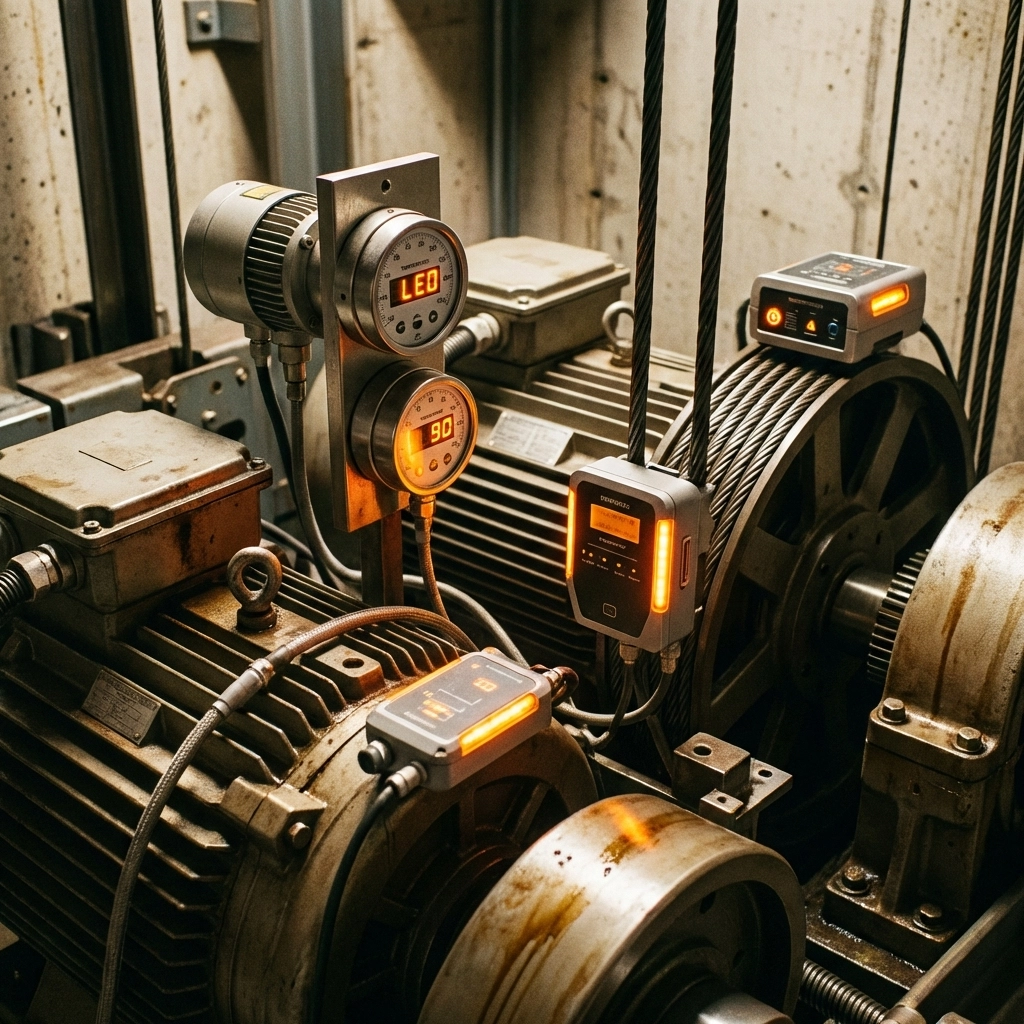
    • Changes in motor temperature under similar load conditions
    • Irregular call patterns at certain times of day

    Individually, none of these mean much.

    But together, they start to form a pattern.
    Minimalist text graphic with the quote: “The most valuable signals are the ones that don’t trigger alerts.” on a light neutral background.

    Patterns Show Up Long Before Problems Do

    Most mechanical issues don’t appear suddenly.

    They develop gradually.

    A door operator doesn’t just fail—it starts closing a fraction of a second slower.
    A drive system doesn’t overheat instantly—it runs slightly warmer under the same demand.

    Here’s what that can look like in real terms:

    • Door cycle time increases by 12–18% over 60 days
      → Early sign of operator wear or alignment issues
    • Average trip time between floors increases by ~0.5–1 second during peak hours
      → Could indicate load strain, dispatch inefficiency, or control system lag
    • Motor temperature trends 8–10°F higher under the same usage conditions
      → Often a precursor to premature component failure
    • Call volume spikes at consistent times (e.g., 8:45–9:15 AM)
      → Not a mechanical issue—but a traffic flow or scheduling bottleneck

    None of these would typically trigger an urgent alert.

    But they’re often the first indicators that something is drifting.
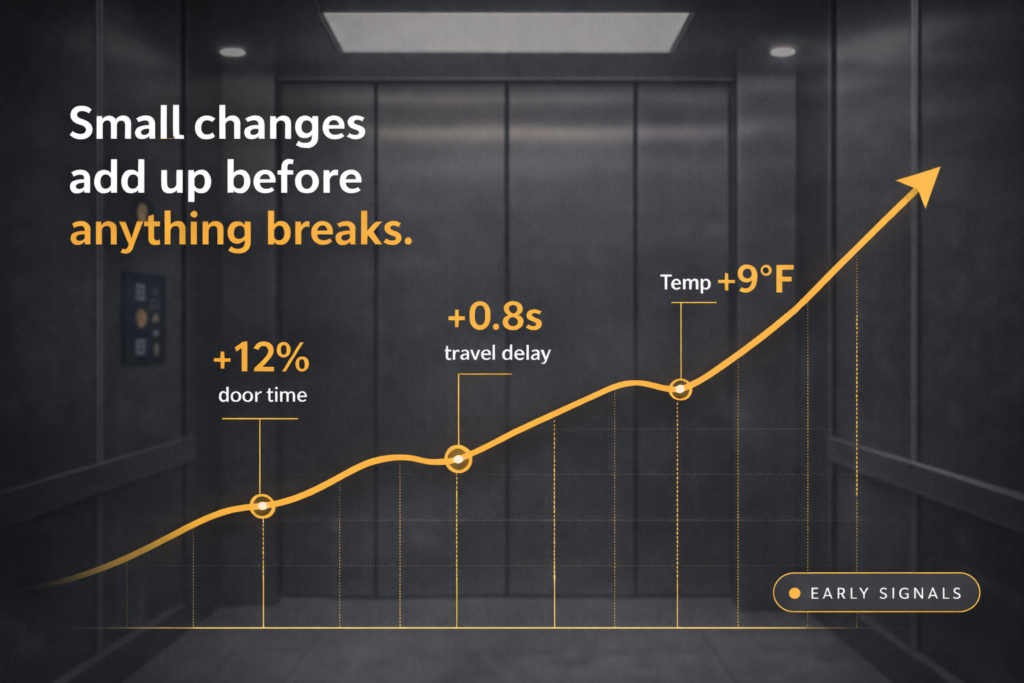
    Elevator interior with upward trend graph showing early warning signals like increased door time, travel delay, and temperature before failure.

    What Most Buildings Are Missing

    Here’s the part that often goes overlooked:

    Elevator data isn’t just about maintenance.
    It’s about behavior.

    When you start looking at trends over time, you can begin to understand:

    • Which elevators are being overused—and when
    • Where traffic bottlenecks consistently form
    • Whether perceived “slowness” is mechanical or operational
    • How dispatch logic is actually performing in real-world conditions

    In some cases, the issue isn’t the equipment at all.

    It’s how the system is being used.

    And without the data, those distinctions are almost impossible to make.

    The Difference Between Activity and Insight

    Most buildings already have activity:

    • Logs
    • Alerts
    • Monthly service reports

    But insight requires something different.

    It requires context.

    Not just:
    “What happened?”

    But:

    • Is this trend consistent or isolated?
    • How does this compare to the last 30, 60, 90 days?
    • Is this happening across all cars—or just one?
    • Does this pattern correlate with time of day or traffic load?

    Without that layer, data becomes noise.

    With it, it becomes direction.

    How to Actually Use the Data (Without Overcomplicating It)

    You don’t need a complex system to start getting value.

    But you do need a more intentional way of looking at what you already have.

    Here are a few practical ways to begin:

    1. Track Trends, Not Just Events
    Instead of reviewing individual alerts, look at:

    • Door cycle times over time
    • Trip durations during peak vs off-peak
    • Repeated minor faults on the same component

    Even a simple monthly comparison can reveal drift.

    2. Review Data in 30–60–90 Day Windows
    Most issues don’t show up in a single report.

    Looking at rolling timeframes helps you spot:

    • Gradual performance decline
    • Seasonal or usage-based patterns
    • Recurring “almost problems”

    3. Separate Mechanical vs Usage Signals
    Not every issue is a repair issue.

    Ask:

    • Is this tied to equipment…or traffic flow?
    • Is one elevator carrying more load than others?
    • Are peak-time delays predictable?

    This can prevent unnecessary service calls—and uncover operational fixes instead.

    4. Identify “Repeat Offenders”
    If the same car or component keeps showing minor irregularities, that’s often more telling than one major failure.

    Small, repeated signals usually point to:

    • Early-stage wear
    • Misalignment
    • Or a system that’s compensating for something else

    5. Ask for Context, Not Just Reports
    Most service reports tell you what happened.

    Fewer explain what’s changing.

    A better question to ask is:

    “What are you seeing that isn’t a problem yet—but is trending that way?”

    That’s where the real value lives.

    Checklist graphic titled “How to Read Your Data” with steps including track trends, compare 30/60/90, and watch repeat patterns.

    Where This Changes Decision-Making

    When data is interpreted correctly, it starts to shift how decisions are made.

    Instead of reacting to failures, you start identifying:

    • Components that are wearing faster than expected
    • Systems under strain due to usage patterns
    • Opportunities to rebalance traffic or adjust performance

    It also changes how you think about cost.

    Because not all expenses are tied to breakdowns.

    Some are tied to inefficiencies that go unnoticed for years.

    The Bottom Line

    Elevator systems are constantly communicating.

    The question is whether anyone is actually listening beyond the obvious signals.

    The real value of data isn’t in catching failures.

    It’s in recognizing the patterns that lead to them—and the opportunities to improve before they ever show up.
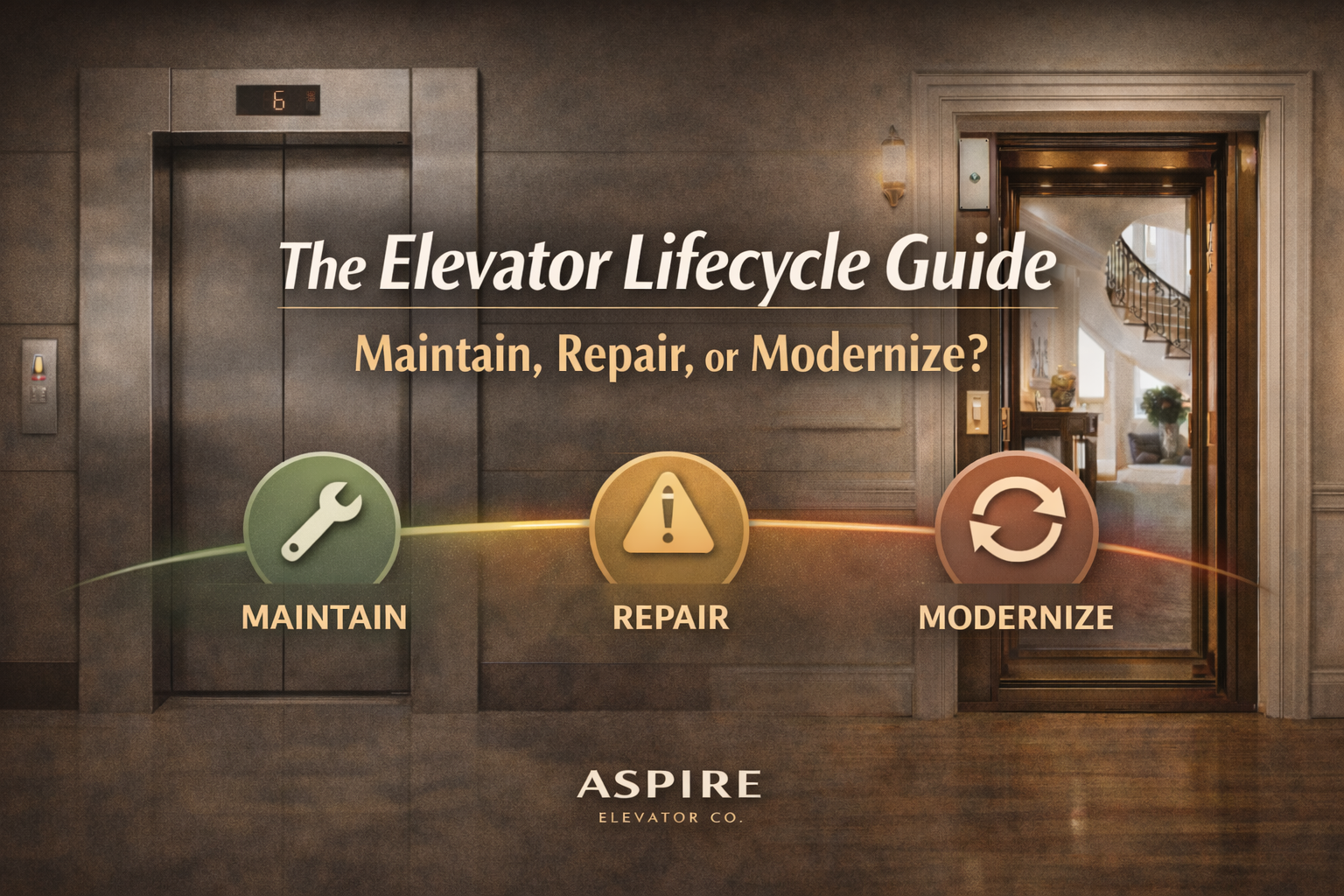
  • The Elevator Lifecycle Guide: Maintain, Repair, or Modernize?

    The Elevator Lifecycle Guide: Maintain, Repair, or Modernize?

    Elevators don’t fail overnight. They age in stages.

    Whether you manage commercial elevators or own a residential elevator at home, the biggest financial mistake isn’t wear and tear, it’s making the wrong decision at the wrong time.

    Should you continue routine elevator maintenance? Is it time for targeted repairs? Or are you overdue for elevator modernization?

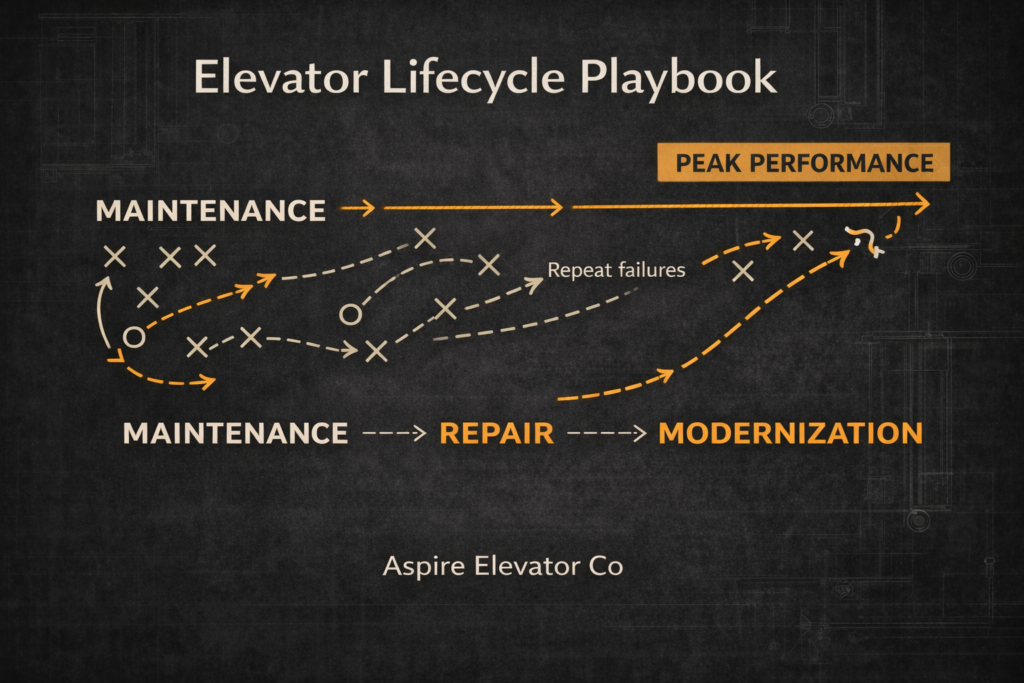
    This lifecycle playbook will help you decide.

    Elevator lifecycle playbook graphic illustrating maintenance, repair, and modernization decision stages for commercial and residential elevator systems.

    Stage 1: Elevator Maintenance- Protecting What Works

    In the early and mid-life stages, most elevators don’t need major upgrades. They need consistent, proactive elevator maintenance.

    Routine maintenance helps:

    • Extend equipment lifespan
    • Prevent premature component failure
    • Reduce downtime
    • Improve passenger safety
    • Keep inspections clean and predictable

    For commercial elevators, strong maintenance programs protect tenant experience and building reputation. For residential elevators, maintenance preserves quiet operation, accessibility, and long-term home value.

    You are likely in the maintenance phase if:

    • Your elevator passes inspections without recurring violations
    • Downtime is rare
    • Emergency service calls are minimal
    • The system is under 10–15 years old

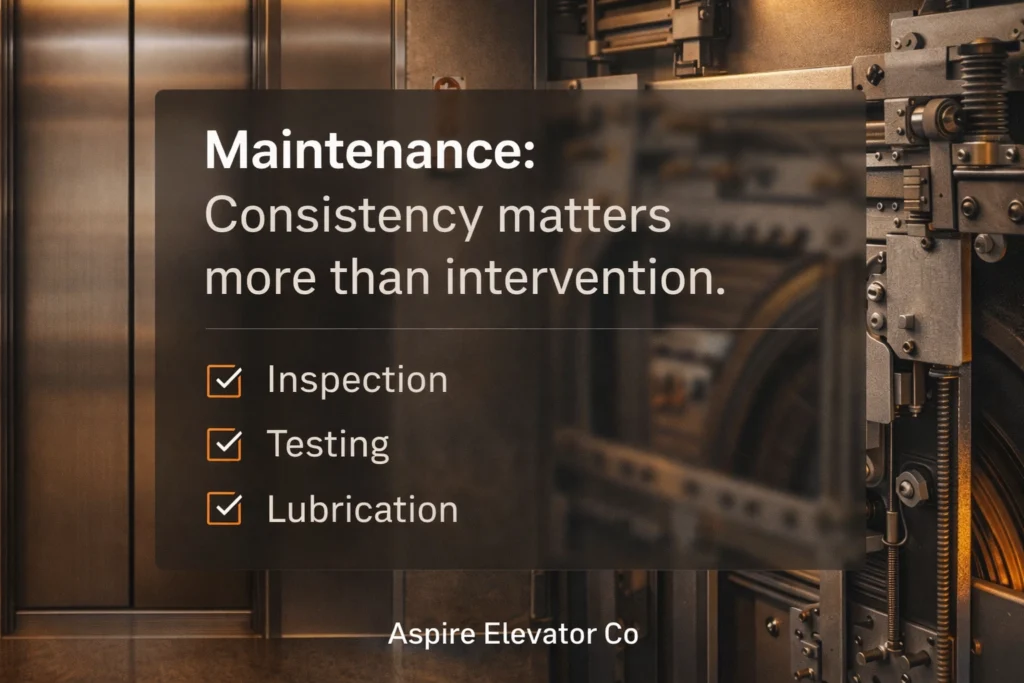
    At this stage, consistency matters more than intervention.

    Elevator maintenance graphic highlighting inspection, testing, and lubrication as part of a proactive elevator maintenance strategy.

    Stage 2: Elevator Repair- Solving Problems Without Overspending

    All elevator systems require repairs over time. Components wear out. Usage increases. Technology evolves.

    The key question is not whether to repair. It’s how often.

    You may be entering a repair-heavy phase if:

    • The same parts are replaced repeatedly
    • Emergency calls are increasing
    • Downtime is disrupting tenants or daily living
    • Parts are harder to source
    • Annual repair costs are climbing

    For commercial buildings, frequent elevator repairs affect tenant satisfaction, lease renewals, online reviews, and overall asset perception.

    For residential elevators, repeated breakdowns reduce daily convenience, accessibility confidence, and buyer appeal if the home goes on the market.

    When repair costs rise steadily, it may signal that modernization should be evaluated.

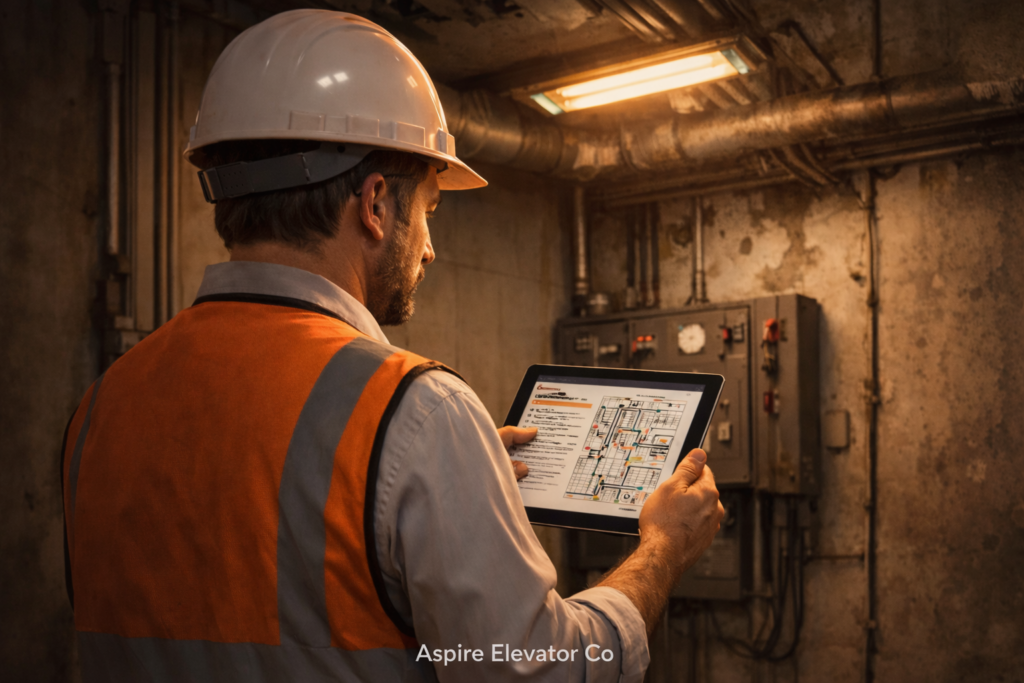
    Elevator technician in safety vest reviewing a digital inspection checklist on a tablet inside a mechanical room.

    Stage 3: Elevator Modernization- Resetting the System for Long-Term Performance

    Elevator modernization is not just cosmetic. It is a strategic investment in reliability, safety, and long-term cost control.

    Modernization can include:

    • Control system upgrades
    • Door operator replacement
    • Drive and motor improvements
    • Safety code compliance updates
    • Interior enhancements for residential systems

    Signs it may be time to modernize:

    • The elevator is 20+ years old
    • Repair costs exceed 25–40% of modernization cost
    • Downtime is increasing
    • Technology is outdated or unsupported
    • Energy efficiency is below current standards

    For commercial properties, elevator modernization can reduce operating costs, improve uptime, support tenant retention, and strengthen property value.

    For residential elevators, modernization can improve accessibility and aging-in-place functionality, increase buyer appeal, and support higher resale value.

    In multi-level homes, especially luxury properties, a well-maintained and modern home elevator can significantly influence purchasing decisions. Accessibility is no longer a niche feature, it’s a long-term value driver.

    Maintenance vs. Repair vs. Modernization: A Practical Comparison

    The most expensive decision is often delayed modernization.

    Waiting too long can result in major component failures, emergency replacements, extended downtime, and higher total lifecycle costs.

    Commercial and Residential Elevators: Different Use, Same Lifecycle Strategy

    Commercial elevators experience:

    • Higher traffic
    • Revenue-sensitive downtime
    • Strict compliance requirements
    • Tenant-driven expectations

    Residential elevators focus on:

    • Accessibility
    • Daily convenience
    • Aging-in-place planning
    • Home resale value

    Despite different usage patterns, both follow the same lifecycle logic: maintain early, repair strategically, modernize when performance and economics align.

    Using Data to Make Smarter Elevator Decisions

    Modern elevator systems and monitoring technology allow owners to track usage frequency, component stress, failure trends, and downtime patterns.

    Predictive insights help shift decisions from reactive to planned.

    That means:

    • Fewer emergency calls
    • More accurate budgeting
    • Better modernization timing

    Whether managing commercial elevators or a residential lift, performance visibility reduces long-term risk.

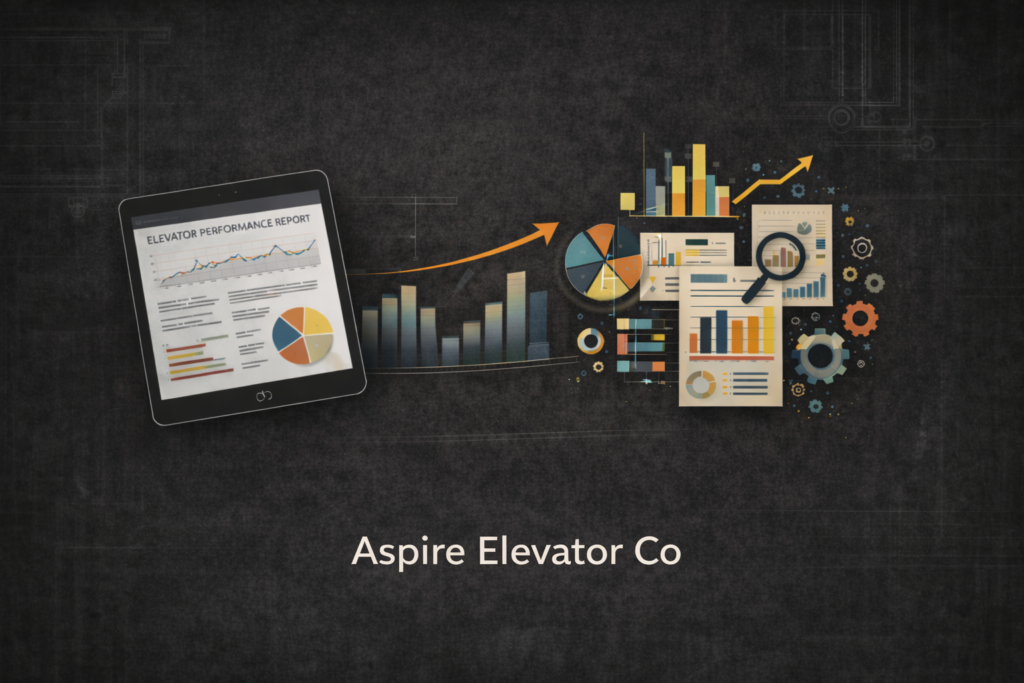
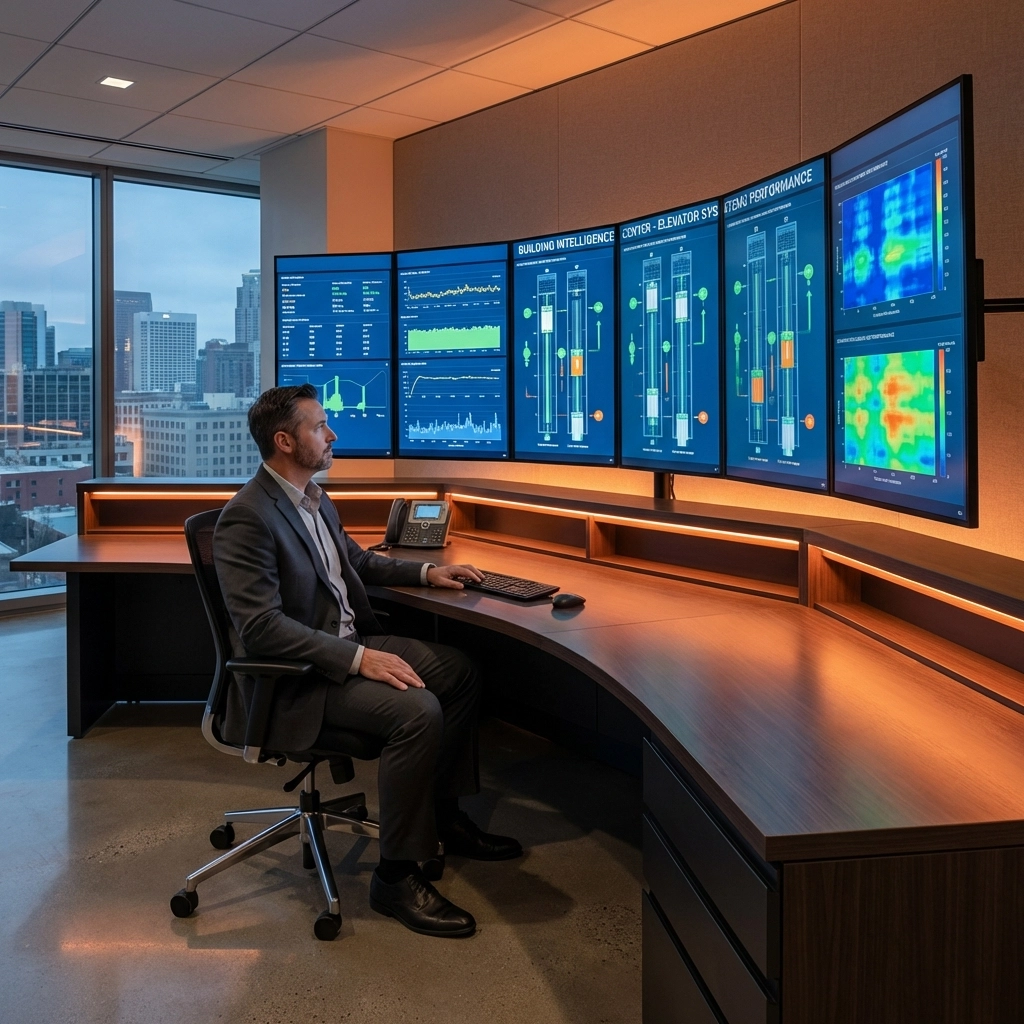
    Data-driven elevator analytics graphic showing performance charts and reports with Aspire Elevator Co branding.

    The Better Question to Ask

    Instead of asking: “Can we get one more year out of it?”

    Ask: “What stage of the elevator lifecycle are we in?”

    When you understand the stage, decisions become clearer. Costs become more predictable. And value is protected: not compromised.

    Elevators Are Long-Term Assets

    Elevators are infrastructure.

    In commercial buildings, they influence tenant retention and asset value. In residential homes, they support accessibility, comfort, and resale potential.

    Owners who manage elevators strategically don’t wait for failure. They plan by lifecycle.

    Schedule a Lifecycle Evaluation

    If you’re unsure whether your elevator is in a maintenance, repair, or modernization phase, Aspire Elevator can evaluate your system and provide a tailored recommendation.

    The right decision at the right stage protects more than equipment. It protects long-term value.

    Contact our team to schedule your lifecycle assessment today.

  • The Top 5 Elevator Monitoring Tools for Commercial Property Managers in 2026

    The Top 5 Elevator Monitoring Tools for Commercial Property Managers in 2026

    Commercial elevator downtime costs the average building $2,500 per hour in lost productivity and tenant satisfaction. With modern monitoring technology, property managers can now prevent 85% of elevator failures before they occur. Here are the five essential monitoring tools that are transforming commercial elevator management in 2026.

    1. Remote Monitoring Systems with Real-Time Analytics

    Remote monitoring platforms have become the backbone of proactive elevator maintenance. These systems track performance metrics 24/7 and instantly alert facility teams when anomalies occur.

    Key Features:

    • Real-time performance tracking across all elevator systems
    • Automatic fault detection and immediate notifications
    • Historical data analysis for usage pattern identification
    • Integration with building management systems (BMS)

    Why It Matters:
    Remote monitoring reduces emergency service calls by 60% and extends elevator lifespan by identifying wear patterns before they cause failures. The BBX VISIBLE IoT Platform exemplifies this technology, offering comprehensive oversight for high-rise buildings with detailed dashboard analytics.

    Implementation Benefits:

    • Immediate notification of mechanical faults
    • Reduced response times from hours to minutes
    • Predictive insights that prevent costly breakdowns
    • Detailed reporting for maintenance planning and budgeting

    Property managers using remote monitoring report average maintenance cost reductions of 25-35% within the first year of implementation.

    2. AI-Driven Predictive Maintenance Systems

    Artificial intelligence has revolutionized how we approach elevator maintenance. Advanced sensor networks collect data on motor temperatures, door operations, vibration patterns, and cable tension, feeding this information into AI algorithms that predict failures weeks in advance.

    Core Capabilities:

    • Motor temperature and performance analysis
    • Door operation cycle monitoring
    • Vibration pattern recognition
    • Cable wear and tension assessment
    • Digital twin simulation for scenario planning

    Proven Results:
    AI-driven systems are reducing elevator downtime by more than 30% across commercial installations globally. These platforms use machine learning to continuously improve their predictive accuracy, becoming more effective over time.

    Strategic Advantages:

    • Schedule maintenance during off-peak hours
    • Order replacement parts before failures occur
    • Eliminate surprise breakdowns during critical business periods
    • Optimize technician schedules and resource allocation

    The technology pays for itself through reduced emergency calls and extended component life, typically showing ROI within 18 months.

    3. Smart Sensor Networks for Comprehensive Diagnostics

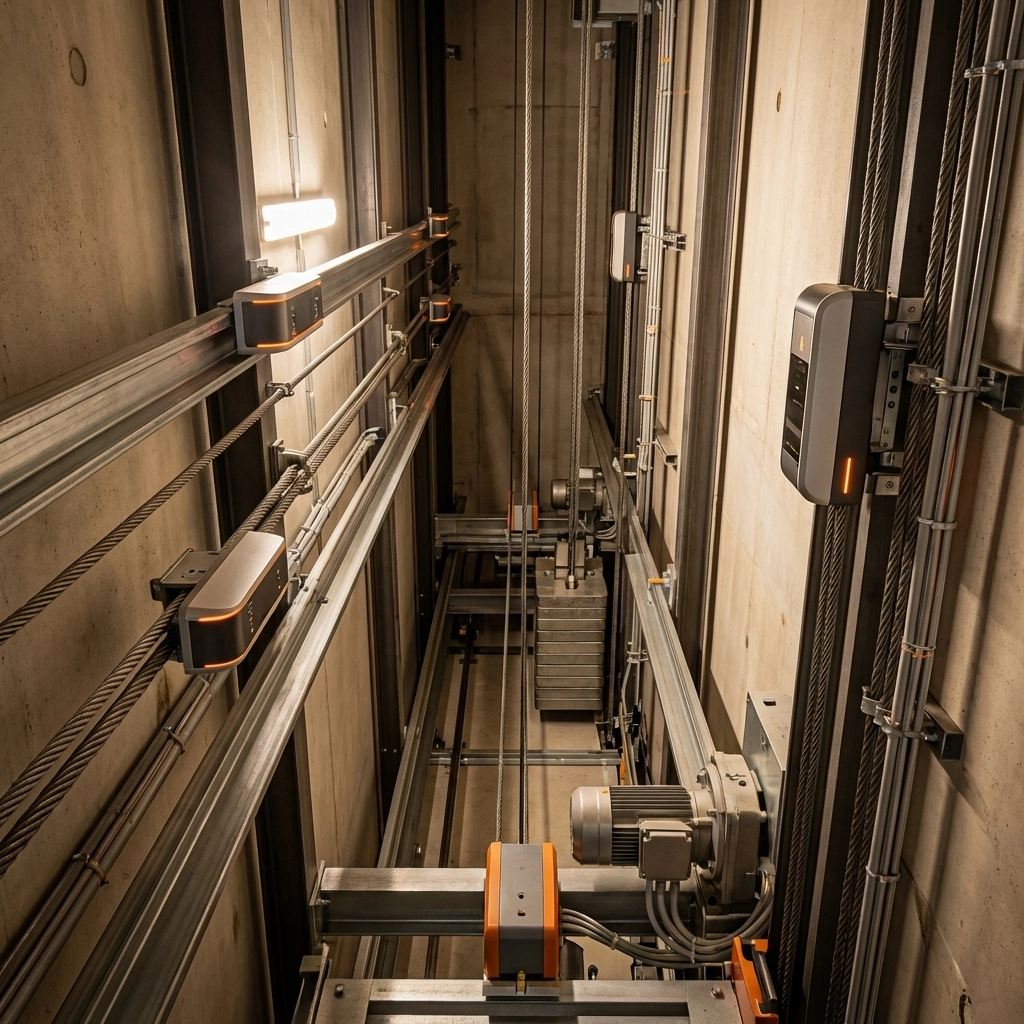
    Modern elevator monitoring relies on strategic sensor placement throughout the elevator system. These sensors provide granular data on every aspect of elevator performance.

    Essential Sensor Types:

    • Motion sensors: Track acceleration, deceleration, and travel smoothness
    • Temperature sensors: Monitor motor, brake, and control room conditions
    • Vibration sensors: Detect bearing wear, alignment issues, and mechanical stress
    • Load sensors: Measure car weight distribution and usage patterns
    • Door sensors: Monitor opening/closing cycles and obstruction detection

    Data Collection Benefits:
    Smart sensors create a complete picture of elevator health, enabling maintenance teams to address minor issues before they escalate. This comprehensive monitoring approach reduces major repair costs by 40-50%.

    Implementation Strategy:
    Start with critical sensors on high-traffic elevators, then expand coverage based on usage patterns and risk assessment. Prioritize sensors that monitor the most failure-prone components: doors, motors, and control systems.

    4. 3D Multi-Beam Door Safety and Monitoring Systems

    Door-related issues account for 60% of elevator service calls in commercial buildings. Advanced 3D multi-beam sensors address this challenge while providing valuable monitoring data.

    Technology Advantages:

    • Earlier movement detection reduces false stops
    • Better performance in high-traffic environments
    • Reduced wear on door mechanisms
    • Enhanced passenger safety and comfort
    • Detailed usage analytics for traffic optimization

    Ideal Applications:

    • Shopping malls and retail centers
    • Airports and transportation hubs
    • Hospitals and healthcare facilities
    • Office buildings with heavy foot traffic
    • Hotels and hospitality venues

    Performance Impact:
    Buildings using 3D multi-beam sensors report 45% fewer door-related service calls and 20% improvement in passenger wait times during peak periods.

    Cost Considerations:
    While initial investment is higher than traditional sensors, the reduction in service calls and improved passenger experience typically yields ROI within 2-3 years.

    5. IoT-Enabled Building Integration Platforms

    Internet of Things (IoT) technology connects elevator monitoring to broader building management systems, creating unified facility oversight.

    Integration Capabilities:

    • Real-time dashboard updates for building operations teams
    • Automated reporting for compliance and maintenance records
    • Integration with access control and security systems
    • Energy usage monitoring and optimization
    • Tenant notification systems for planned maintenance

    Operational Benefits:
    IoT platforms enable property managers to monitor elevator performance alongside HVAC, lighting, and security systems from a single interface. This integration improves response coordination and reduces operational complexity.

    Key Features:

    • Mobile app access for remote monitoring
    • Automated maintenance scheduling
    • Vendor management and service coordination
    • Compliance documentation and reporting
    • Energy efficiency tracking and optimization

    Maximizing Your Monitoring Investment

    Start with High-Impact Areas:
    Focus initial monitoring investments on elevators with the highest traffic or most critical to building operations. This approach maximizes immediate benefits while building experience with the technology.

    Plan for Integration:
    Choose monitoring tools that integrate with existing building systems and can scale as your portfolio grows. Avoid vendor lock-in by selecting platforms with open APIs and industry-standard protocols.

    Staff Training Requirements:
    Ensure your maintenance team receives proper training on monitoring platforms. Most property managers see optimal results when at least two team members are fully trained on each system.

    Performance Metrics to Track:

    • Average downtime per elevator per month
    • Preventive vs. reactive maintenance ratio
    • Tenant satisfaction scores
    • Energy consumption per elevator
    • Total cost of ownership including monitoring systems

    Implementation Timeline and ROI Expectations

    Most comprehensive monitoring implementations take 3-6 months from planning to full operation. Property managers typically see measurable improvements within 90 days, with full ROI within 18-24 months.

    Phase 1 (Months 1-2): System selection, vendor negotiations, and installation planning
    Phase 2 (Months 2-4): Hardware installation and system integration
    Phase 3 (Months 4-6): Staff training and process optimization

    The combination of reduced downtime, lower maintenance costs, and improved tenant satisfaction creates compelling business value that justifies the investment in monitoring technology.

    For commercial properties seeking to implement comprehensive elevator monitoring solutions, professional guidance ensures optimal system selection and integration. The right monitoring strategy transforms elevator management from reactive maintenance to proactive optimization, delivering measurable improvements in performance, cost control, and tenant satisfaction.

    Modern elevator monitoring isn’t just about preventing breakdowns; it’s about optimizing building operations and creating superior tenant experiences through reliable, efficient vertical transportation systems.

    Ready to reduce downtime and improve tenant satisfaction? Contact Aspire Elevator Co. for expert monitoring solutions or to schedule a consultation.