
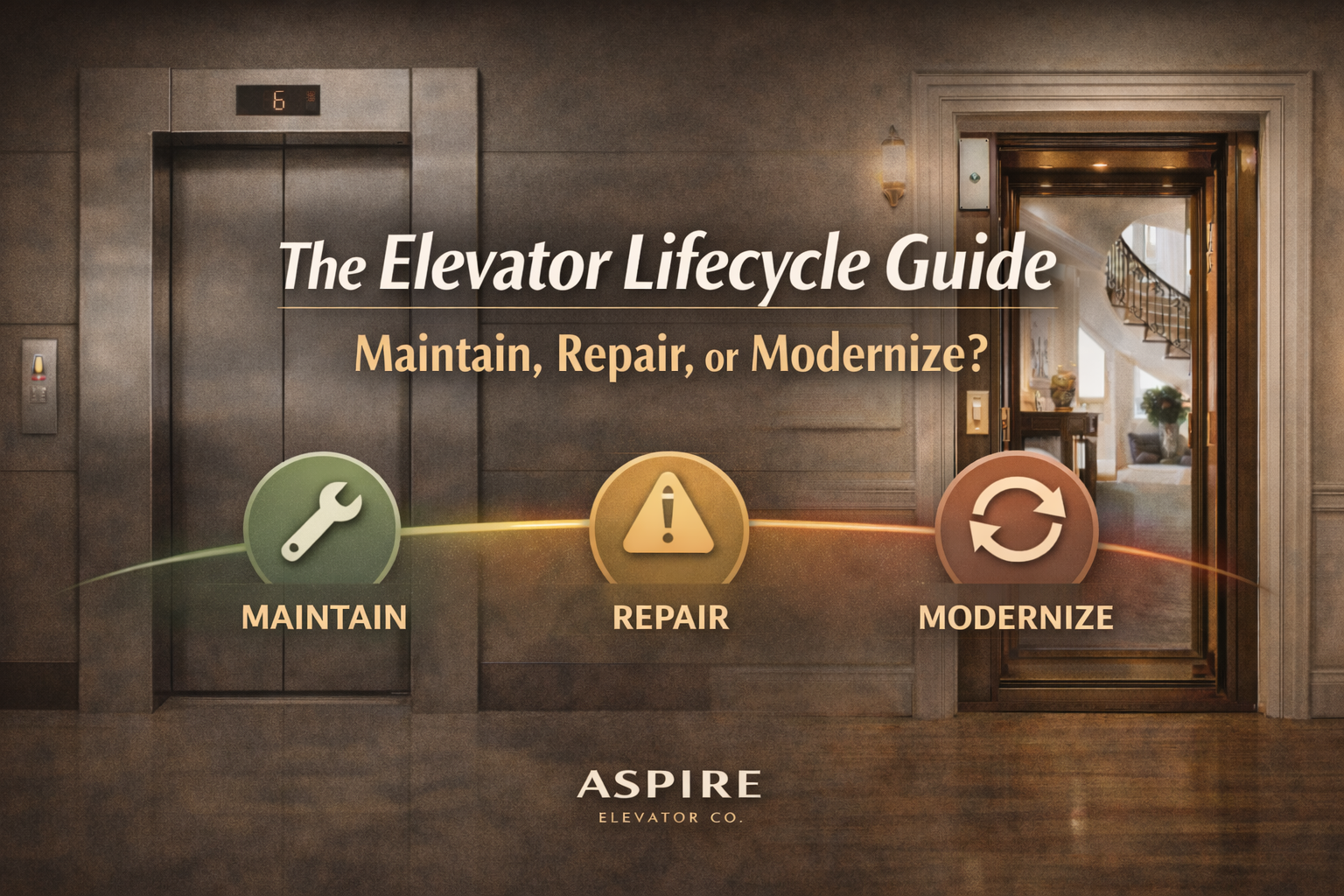
Elevators don’t fail overnight. They age in stages.
Whether you manage commercial elevators or own a residential elevator at home, the biggest financial mistake isn’t wear and tear, it’s making the wrong decision at the wrong time.
Should you continue routine elevator maintenance? Is it time for targeted repairs? Or are you overdue for elevator modernization?
This lifecycle playbook will help you decide.
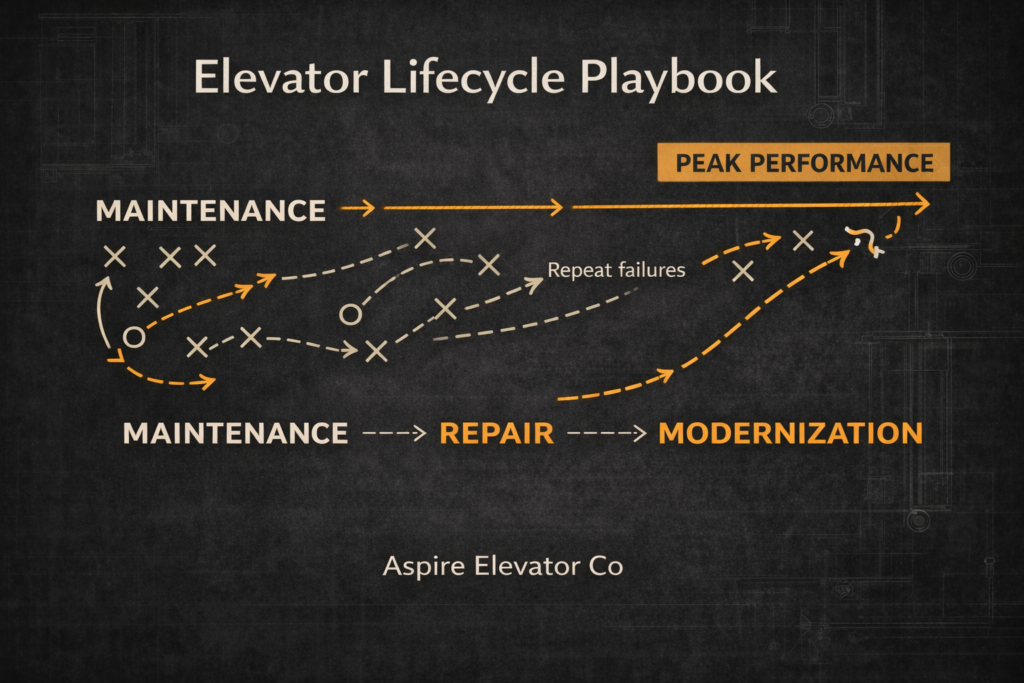
Stage 1: Elevator Maintenance- Protecting What Works
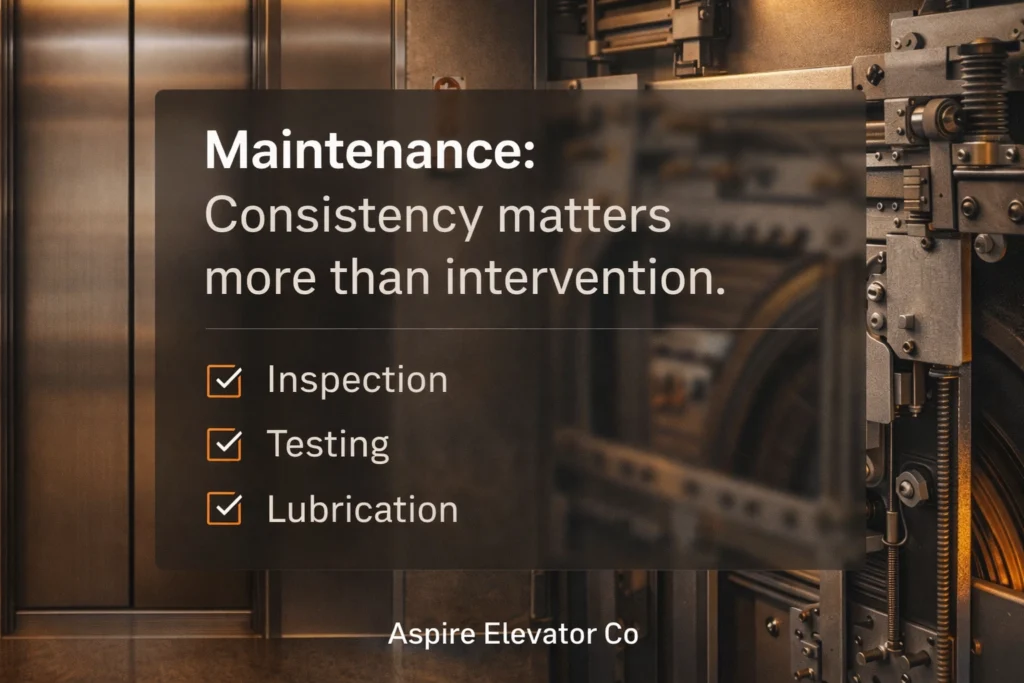
In the early and mid-life stages, most elevators don’t need major upgrades. They need consistent, proactive elevator maintenance.
Routine maintenance helps:
- Extend equipment lifespan
- Prevent premature component failure
- Reduce downtime
- Improve passenger safety
- Keep inspections clean and predictable
For commercial elevators, strong maintenance programs protect tenant experience and building reputation. For residential elevators, maintenance preserves quiet operation, accessibility, and long-term home value.
You are likely in the maintenance phase if:
- Your elevator passes inspections without recurring violations
- Downtime is rare
- Emergency service calls are minimal
- The system is under 10–15 years old
At this stage, consistency matters more than intervention.
Stage 2: Elevator Repair- Solving Problems Without Overspending
All elevator systems require repairs over time. Components wear out. Usage increases. Technology evolves.
The key question is not whether to repair. It’s how often.
You may be entering a repair-heavy phase if:
- The same parts are replaced repeatedly
- Emergency calls are increasing
- Downtime is disrupting tenants or daily living
- Parts are harder to source
- Annual repair costs are climbing
For commercial buildings, frequent elevator repairs affect tenant satisfaction, lease renewals, online reviews, and overall asset perception.
For residential elevators, repeated breakdowns reduce daily convenience, accessibility confidence, and buyer appeal if the home goes on the market.
When repair costs rise steadily, it may signal that modernization should be evaluated.
Stage 3: Elevator Modernization- Resetting the System for Long-Term Performance
Elevator modernization is not just cosmetic. It is a strategic investment in reliability, safety, and long-term cost control.
Modernization can include:
- Control system upgrades
- Door operator replacement
- Drive and motor improvements
- Safety code compliance updates
- Interior enhancements for residential systems
Signs it may be time to modernize:
- The elevator is 20+ years old
- Repair costs exceed 25–40% of modernization cost
- Downtime is increasing
- Technology is outdated or unsupported
- Energy efficiency is below current standards
For commercial properties, elevator modernization can reduce operating costs, improve uptime, support tenant retention, and strengthen property value.
For residential elevators, modernization can improve accessibility and aging-in-place functionality, increase buyer appeal, and support higher resale value.
In multi-level homes, especially luxury properties, a well-maintained and modern home elevator can significantly influence purchasing decisions. Accessibility is no longer a niche feature, it’s a long-term value driver.
Maintenance vs. Repair vs. Modernization: A Practical Comparison
The most expensive decision is often delayed modernization.
Waiting too long can result in major component failures, emergency replacements, extended downtime, and higher total lifecycle costs.
Commercial and Residential Elevators: Different Use, Same Lifecycle Strategy
Commercial elevators experience:
- Higher traffic
- Revenue-sensitive downtime
- Strict compliance requirements
- Tenant-driven expectations
Residential elevators focus on:
- Accessibility
- Daily convenience
- Aging-in-place planning
- Home resale value
Despite different usage patterns, both follow the same lifecycle logic: maintain early, repair strategically, modernize when performance and economics align.
Using Data to Make Smarter Elevator Decisions
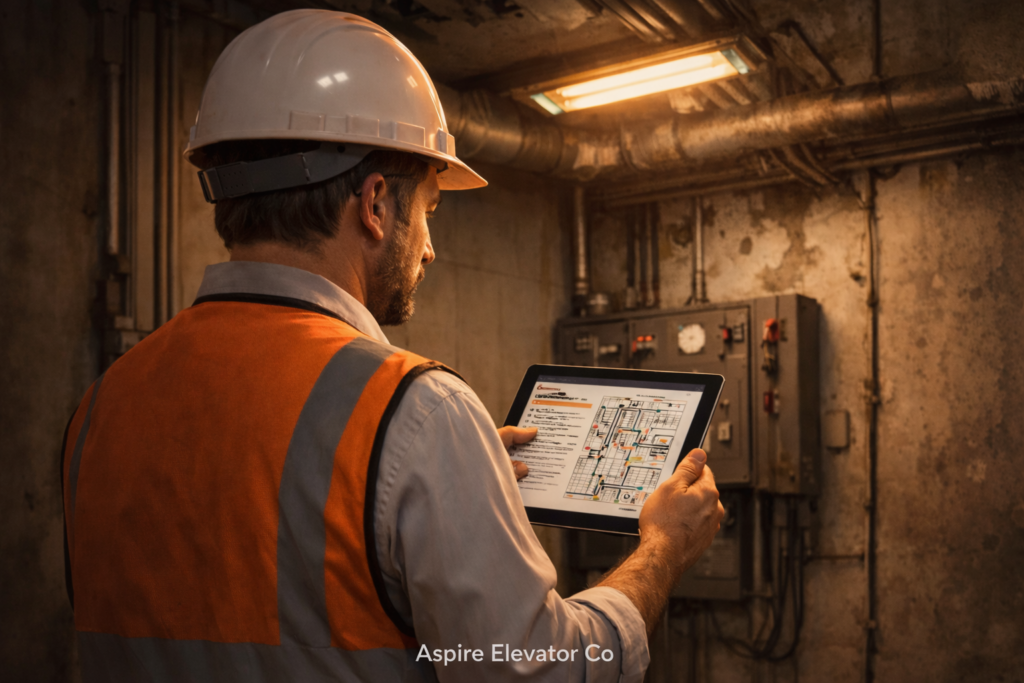
Modern elevator systems and monitoring technology allow owners to track usage frequency, component stress, failure trends, and downtime patterns.
Predictive insights help shift decisions from reactive to planned.
That means:
- Fewer emergency calls
- More accurate budgeting
- Better modernization timing
Whether managing commercial elevators or a residential lift, performance visibility reduces long-term risk.
The Better Question to Ask
Instead of asking: “Can we get one more year out of it?”
Ask: “What stage of the elevator lifecycle are we in?”
When you understand the stage, decisions become clearer. Costs become more predictable. And value is protected: not compromised.
Elevators Are Long-Term Assets
Elevators are infrastructure.
In commercial buildings, they influence tenant retention and asset value. In residential homes, they support accessibility, comfort, and resale potential.
Owners who manage elevators strategically don’t wait for failure. They plan by lifecycle.
Schedule a Lifecycle Evaluation
If you’re unsure whether your elevator is in a maintenance, repair, or modernization phase, Aspire Elevator can evaluate your system and provide a tailored recommendation.
The right decision at the right stage protects more than equipment. It protects long-term value.
Contact our team to schedule your lifecycle assessment today.