
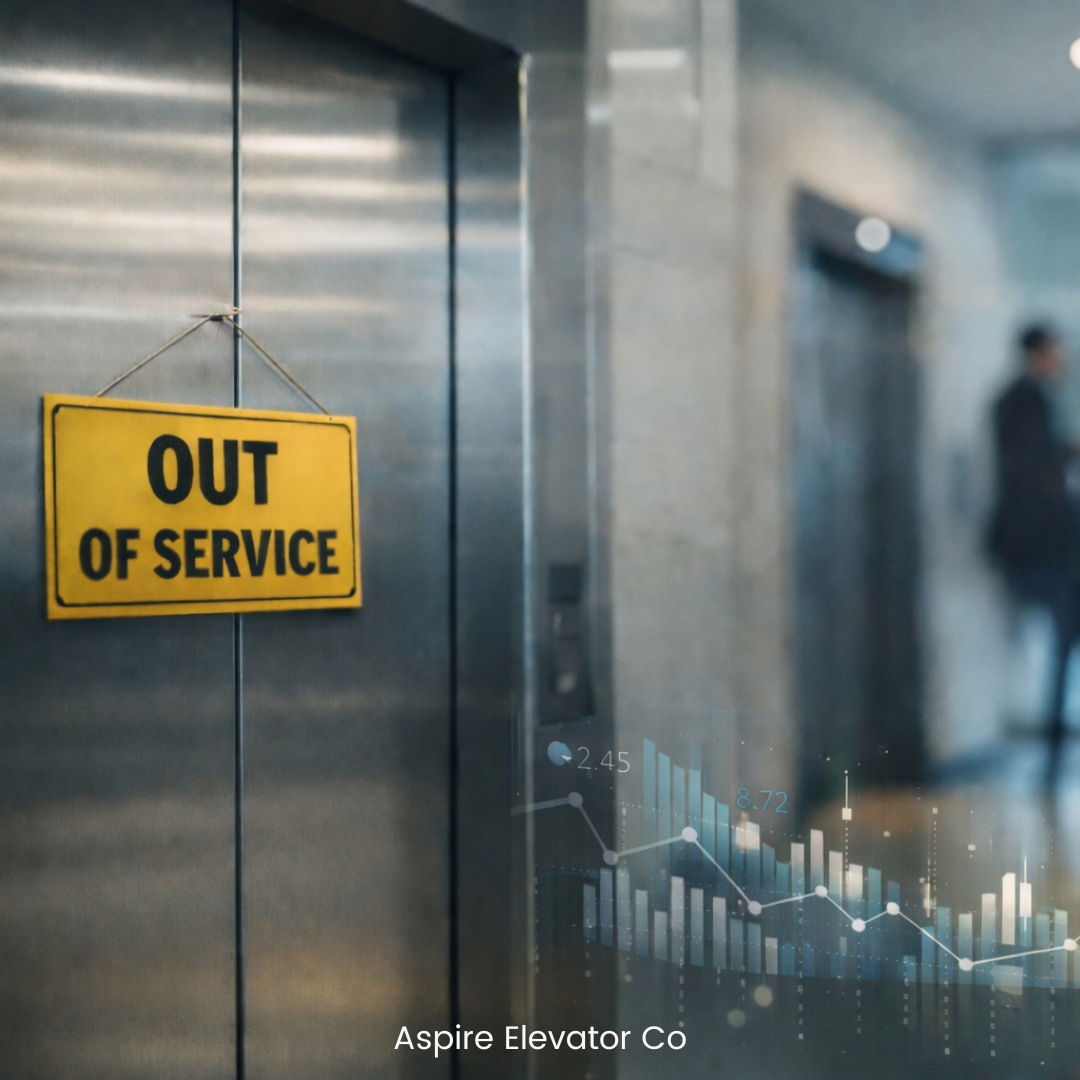
For most commercial properties, an elevator being out of service is treated as a temporary inconvenience.
But in reality, elevator downtime is rarely just a maintenance issue.
It’s an operational disruption that creates costs across multiple parts of a property’s ecosystem.
The challenge is that many of these costs don’t appear on a maintenance invoice.
They show up in tenant frustration, operational delays, and long-term asset perception.
When property managers begin to quantify these impacts, elevator uptime becomes less about fixing problems and more about protecting the performance of the entire building.
Why Elevator Downtime Is More Expensive Than It Looks
Most building owners evaluate downtime in simple terms:
Repair cost + technician labor.
But the broader financial picture is usually much larger.
When elevators stop operating, they can trigger:
- Tenant productivity disruptions
- Increased wait times during peak hours
- Service delays for deliveries and vendors
- Accessibility challenges for certain occupants
- Higher pressure on remaining elevators
In multi-tenant buildings, the ripple effects can impact dozens or even hundreds of occupants at once.
And when downtime becomes frequent or unpredictable, it begins to affect how tenants perceive the reliability of the entire property.

The Operational Ripple Effect
Elevators function as circulatory systems within commercial buildings.
When one unit goes down, the system rarely stops completely.
Instead, the remaining elevators absorb the load.
That often results in:
- Longer wait times
- Congestion during peak hours
- Reduced efficiency moving tenants throughout the building
In high-traffic environments, even a single elevator outage can shift traffic patterns across the entire building.
What looks like a short interruption can quietly become a daily operational bottleneck.
Quantifying the Hidden Costs
To understand the real impact of elevator downtime, it helps to look beyond repair invoices and examine operational metrics.
Property managers can begin estimating costs through a few key factors.
1. Tenant Time Loss
If a building houses 500 tenants and elevator wait times increase by just 3 minutes per trip, the cumulative productivity impact can add up quickly.
Even small delays across hundreds of daily elevator trips can translate into significant lost time over the course of a year.
2. Service and Delivery Delays
Service vendors, maintenance teams, and deliveries all rely on elevators to move efficiently through a building.
Downtime can slow these operations and create compounding delays across multiple services.
3. Tenant Satisfaction and Retention
While difficult to measure directly, building reliability plays a significant role in how tenants evaluate their space.
Frequent elevator outages can quietly influence:
- Tenant renewal decisions
- Property reputation
- Overall tenant experience
In competitive leasing markets, operational reliability often becomes a differentiating factor.
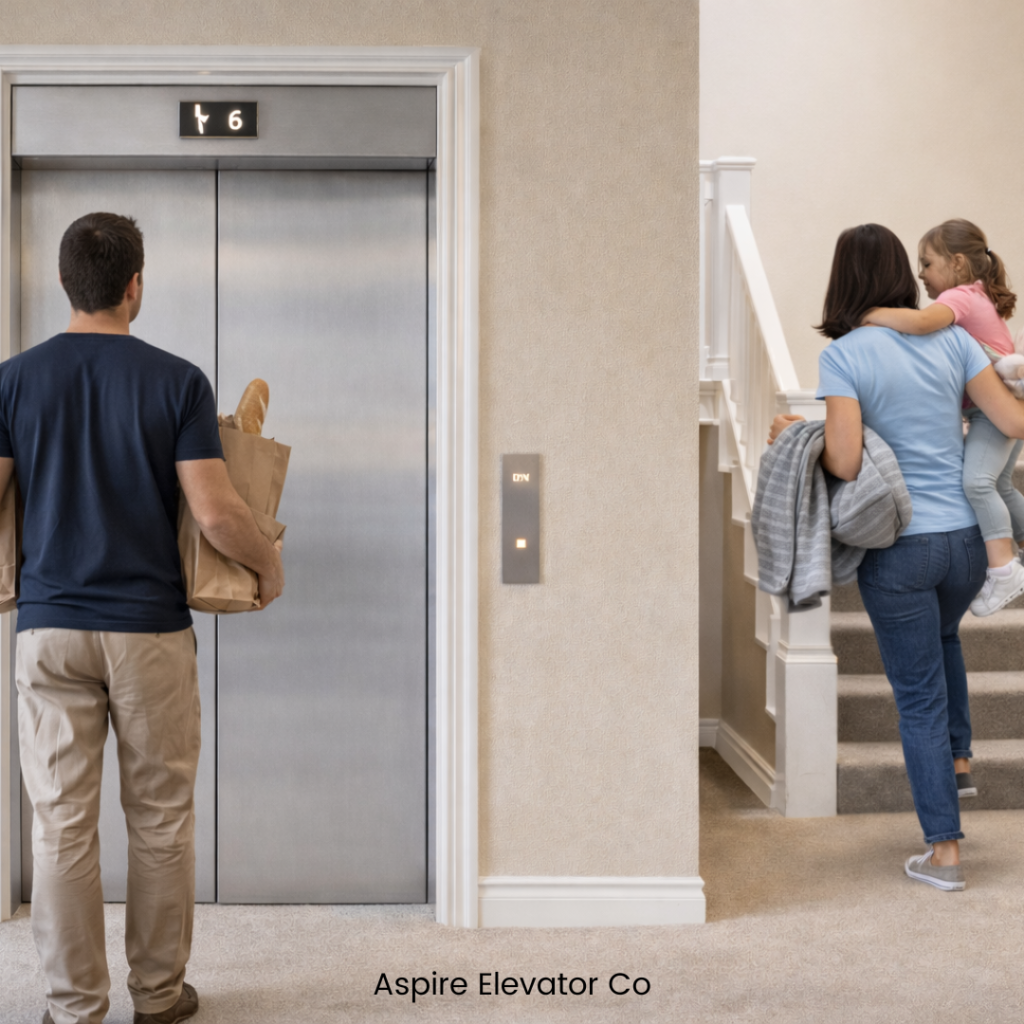
Why Downtime Often Goes Unnoticed Until It’s Frequent
One reason these costs stay hidden is that downtime is often reactive rather than tracked strategically.
Elevators are repaired when they fail, and operations resume shortly after.
But without tracking patterns, it can be difficult to identify:
- Recurring equipment issues
- Increasing downtime frequency
- System performance trends over time
This is where modern elevator monitoring systems are beginning to change how buildings manage vertical transportation.
Instead of reacting to failures, monitoring tools can help property managers:
- Identify early warning signs
- Track system performance
- Reduce unplanned outages
- Make more informed maintenance decisions
The goal is not simply faster repairs.
It’s fewer disruptions overall.

From Reactive Repairs to Strategic Asset Management
Elevators are long-life assets that play a central role in how a building operates.
When downtime is viewed only as a repair issue, opportunities to improve reliability can be missed.
But when it’s evaluated through an operational lens, elevators become part of a broader strategy focused on:
- Tenant experience
- Building efficiency
- Long-term asset planning
For many commercial properties, the most effective approach is shifting from reactive service calls toward data-driven monitoring and preventative maintenance.
Because the true cost of downtime isn’t just fixing an elevator.
It’s everything that happens while the building waits for it to come back online.
Want to reduce unexpected elevator downtime?
Aspire Elevator Co helps property owners and managers improve elevator reliability through monitoring, preventative maintenance planning, and long-term asset strategy.
Contact our team to learn how we can help keep your building moving.