
Rethinking how residential elevators integrate into high-end home design
When someone walks into a luxury home, they’re not evaluating features right away.
They’re feeling something.
Before square footage, before finishes, before price—there’s an immediate sense of whether the home feels cohesive, intentional, and complete. And in that first impression, even small disruptions can stand out.
One of the most overlooked contributors to that feeling?
The residential elevator.
Too often treated as a utility, an elevator can either quietly reinforce the flow of a home—or interrupt it entirely. And today’s luxury buyer notices the difference.
It’s Not About the Elevator—It’s About the Flow
Luxury design has shifted.
It’s no longer about adding more—it’s about making everything work together. Clean sightlines, consistent materials, and thoughtful transitions define how a home feels.
An elevator sits right in the middle of that experience.
When it’s placed awkwardly, designed as an afterthought, or finished without regard to the surrounding space, it creates friction. A visual pause. A moment where the home stops feeling seamless.
But when it’s done right, it disappears into the rhythm of the home—or becomes a feature that enhances it.
Where Placement Starts (And Why It Matters)
The biggest mistake isn’t how an elevator looks.
It’s when it’s considered too late.
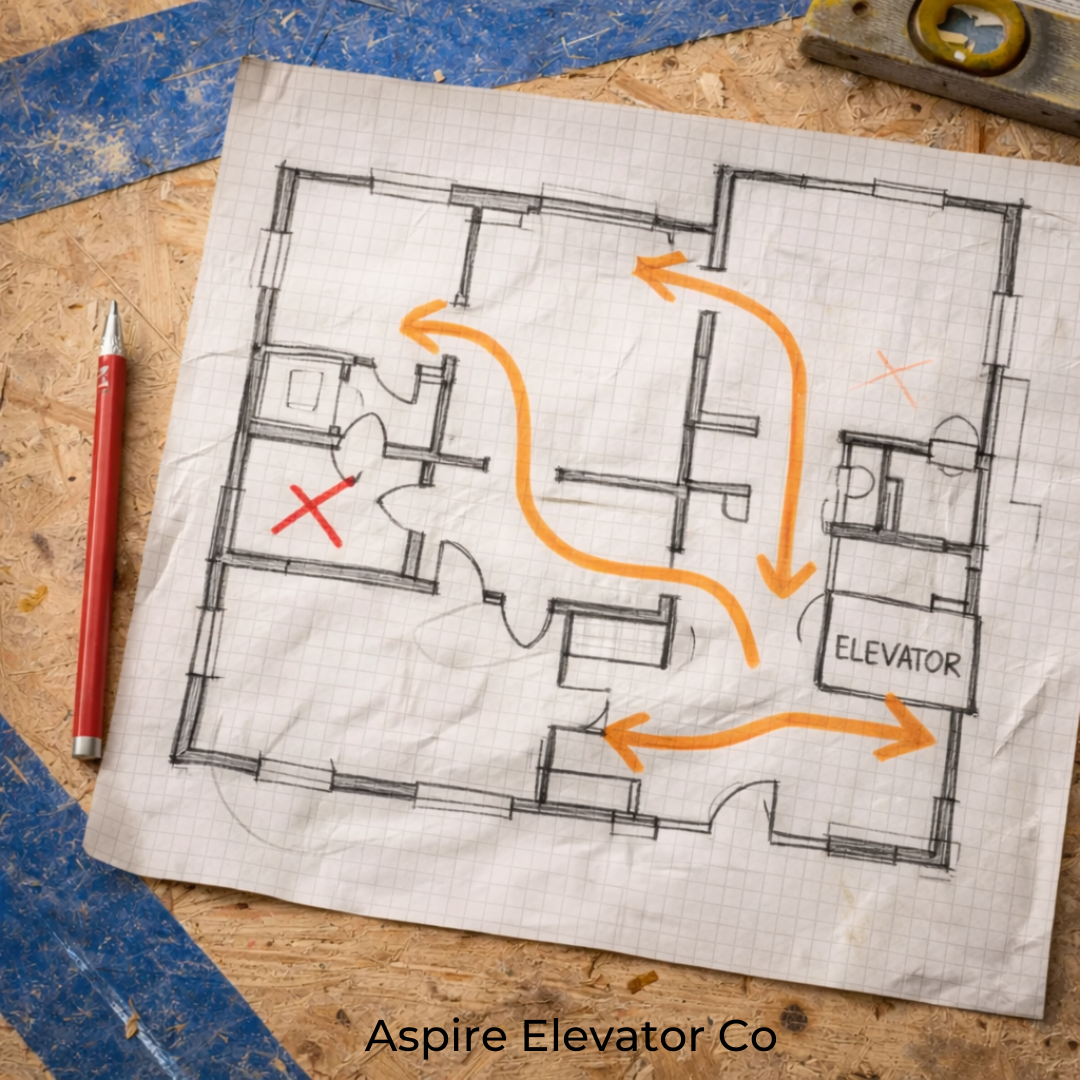
In the strongest luxury builds, elevator placement is decided early—at the architectural level—because it impacts both flow and function across every floor.
Thoughtful placement typically considers:
- Natural traffic patterns
The elevator should sit where movement already happens—not tucked away like a service element or forced into unused space. - Vertical alignment across floors
Consistency matters. Misaligned landings or awkward entry points immediately signal poor planning. - Proximity to key living spaces
Close enough to be convenient, but not intrusive to primary gathering areas. - Sightlines and first impressions
What do you see when you walk in? If the elevator is visible, it needs to feel intentional—not accidental.
In coastal markets and multi-story homes especially, where elevators are often essential, placement isn’t just functional—it’s foundational to how the home is experienced.
How Designers Integrate Elevators (Step by Step)
Once placement is right, integration becomes the focus.
This is where luxury homes separate themselves—because the goal isn’t to “add” an elevator. It’s to make it feel like it was always part of the design.
Here’s how that’s done:
1. Align the Architecture
The elevator shaft and entry points are designed alongside the home—not retrofitted later. This ensures clean lines, balanced proportions, and consistent flow from floor to floor.
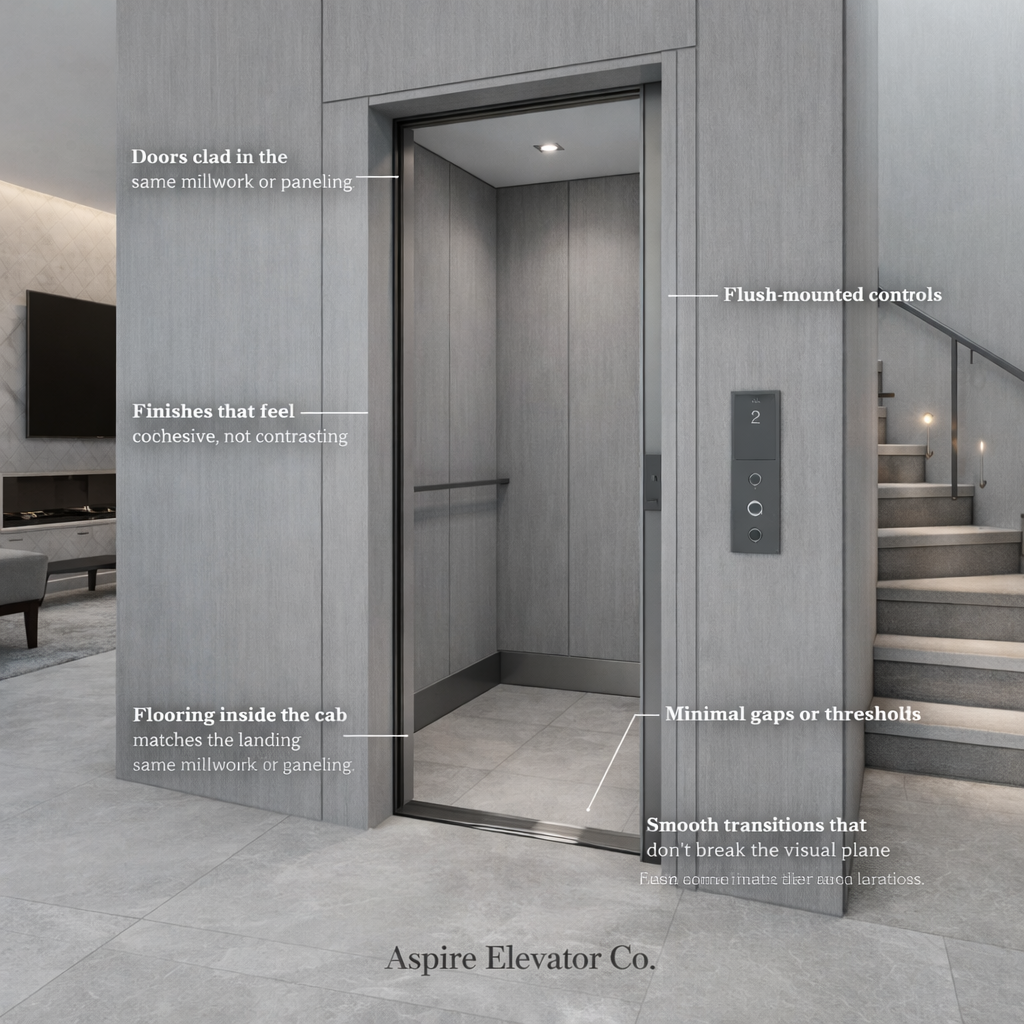
2. Match the Surrounding Materials
One of the most effective techniques is blending the elevator into the existing finishes:
- Doors clad in the same millwork or paneling
- Hardware that mirrors the home’s fixtures
- Finishes that feel cohesive, not contrasting
Done well, the elevator can visually disappear into the wall.
3. Create Seamless Transitions
Details matter more than people realize:
- Flooring inside the cab matches the landing
- Minimal gaps or thresholds
- Smooth transitions that don’t break the visual plane
These small choices reinforce continuity throughout the home.
4. Simplify the Interface
Luxury today leans minimal.
Bulky buttons and industrial panels are replaced with:
- Flush-mounted controls
- Touch interfaces
- Custom metal finishes that align with lighting and hardware
Nothing should feel out of place.
5. Refine the Experience
What buyers feel matters just as much as what they see.
- Quiet, smooth movement
- Soft door operation
- No vibration or mechanical noise
Because the moment something feels “mechanical,” the illusion of luxury breaks.
Invisible or Iconic—But Never Accidental
The best-designed homes take a clear stance:
Seamless (Invisible)
The elevator blends completely into the architecture—hidden in plain sight through matched finishes and minimal detailing.
Statement (Iconic)
Or, it becomes a focal point:
- Glass enclosures
- Custom lighting
- Sculptural placement within staircases or atriums
Both approaches work.
What doesn’t work is indecision—when the elevator feels like it was added without a clear design intent.
Why Buyers Are Paying Attention Now
Luxury buyers today are more design-aware than ever.
They notice:
- Consistency in materials
- Flow between spaces
- Whether every detail feels considered
And while they may not immediately call out the elevator, they will absolutely feel when something is off.
In a market where perception drives value, that matters.
The Takeaway
The first impression of a luxury home isn’t built on a single feature.
It’s built on how everything works together.
An elevator may not be the focal point—but it plays a critical role in whether a home feels complete. When it’s placed thoughtfully and integrated from the start, it becomes part of the home’s rhythm.
And when that happens, buyers don’t notice the elevator itself.
They just know the home feels right.
If you’re planning a new build or refining an existing home, elevator design should be part of the conversation early—not an afterthought.
At Aspire Elevator, we work alongside architects, builders, and homeowners to ensure every detail feels intentional from the start.
Start the conversation with our team.
Leave a Reply